
ARTICLE SUMMARY:
A digital twin ICU project at the University of Florida keeps humans between AI and the patient. Excerpted from our recent feature, The Nuts and Bolts of Artificial Intelligence in Medtech.
While AI is rapidly gaining the capability to cover a large share of core cognitive tasks in healthcare (summarizing, diagnosis support, note writing, risk prediction), unavoidable uncertainty in medicine still demands human judgment, said Azra Bihorac, MD, a nephrologist and critical care physician, who is director and co-founder of the University of Florida’s Intelligent Clinical Care Center (IC3). Bihorac is also the senior associate dean of research at the University of Florida College of Medicine and the R. Glenn Davis Professor of Medicine, Surgery, Anesthesiology and Physiology and Functional 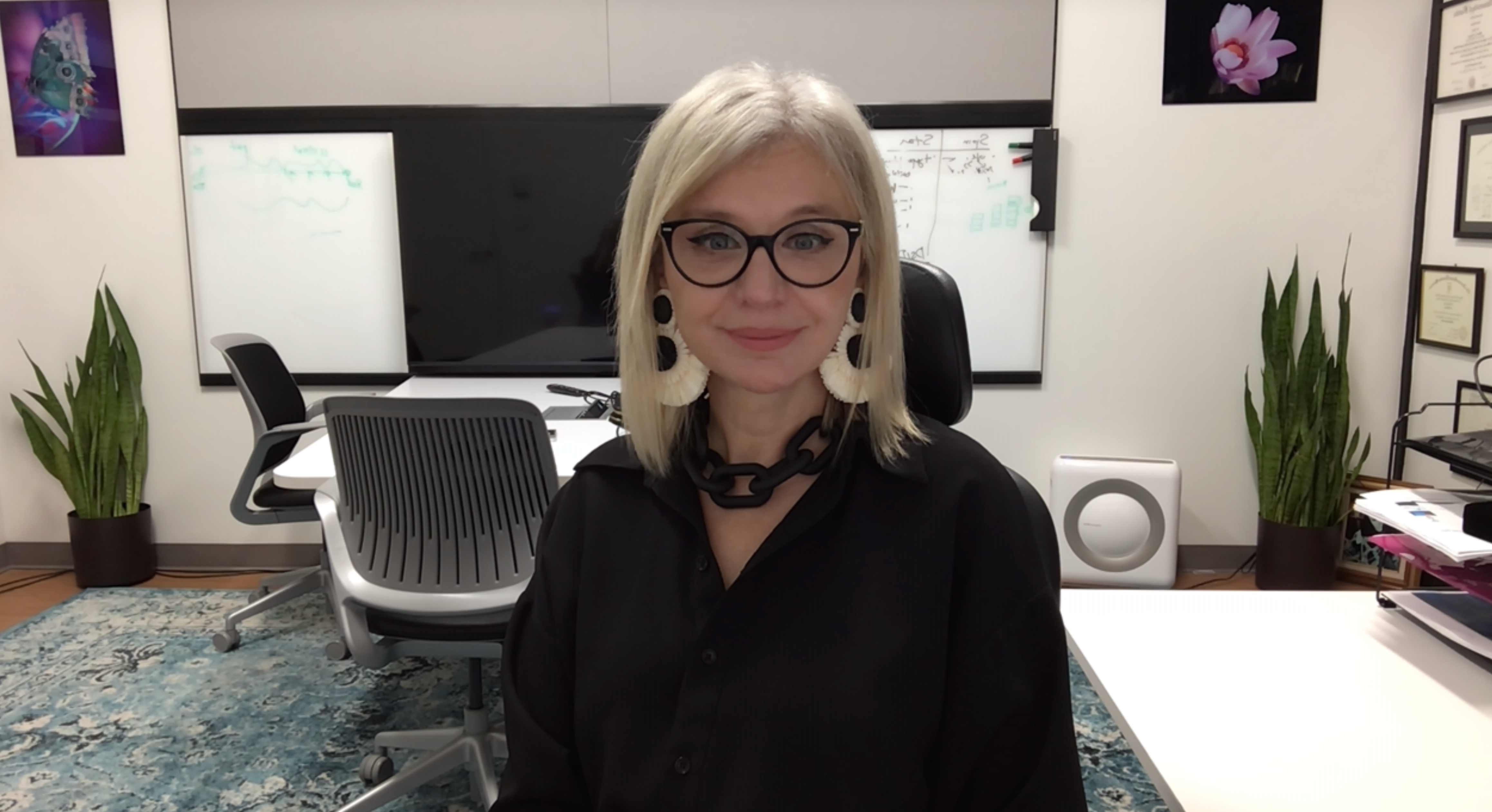 Genomics.
In a recent ICU case, an AI sepsis alert indicated only medium confidence in an ICU patient’s risk for acute kidney injury, while a junior resident, shaped by prior experience, acted anyway and successfully treated the patient. Even when models and workflows are imperfect, a clinician’s ability to sense that “something is wrong” and act under uncertainty is a distinctive “superpower” that must be preserved, Bihorac said.
She described a 40% gap between what AI is capable of and its current use for clinical purposes and attributed this deficiency not just to safety concerns but to a complex mix of methodological, contextual, equity, human, epistemic, and structural gaps.
To close these, she proposed a “validation arc” for AI models: moving beyond retrospective testing to silent deployments, and ultimately to prospective clinical trials, similar to how scientists evaluate drugs and traditional medical devices. “Why do we think it is okay to use AI at the bedside without prospectively testing that it actually delivers, while it is not okay to do that for medical devices?” she asked.
Bihorac’s research in the ICU focuses on real-time decisions and ambient, multisensory AI. Her team has built an “intelligent ICU” that includes facial expressions, movement, and environmental factors like light and noise, in addition to EHR information. An acuity model (APRICOT-M, or Acuity Prediction in Intensive Care Unit–Mamba) they developed matches patient severity to resource use and a delirium-focused large language model that integrates notes and structured data, ultimately aiming for closed-loop systems that automatically adjust the ICU environment to reduce delirium risk.
The University of Florida, NVIDIA, and Mark III Systems, a “digital and IT ‘full-stack’ solutions provider,” are partnering to create an intelligent digital twin of UF Health’s NeuroICU unit. The project uses NVIDIA Omniverse architecture, which enables real-time visualization, and UF’s HiPerGator supercomputer to link the virtual ICU to real-world devices in real time as a simulation space for operations and clinical training, akin to a flight simulator for medicine.
Yet, despite these sophisticated systems, Bihorac insisted that a human must remain between AI and the patient. Drawing on an economic framework that divides skills into implementation, payoff judgment, and “opportunity judgment,” she argued that AI will likely surpass humans in the first two domains, but not in the third: recognizing that a situation is off before data and labels fully capture it. She warned that if trainees lean too heavily on sources like Open Evidence and various AI scribes early in their formation, they may never fully develop deep, experience-based judgment. This, she suggested, would be a crisis in medical education.
Looking forward, Bihorac proposed that the next-generation physician must inhabit three roles: healer (the irreducible human presence at the bedside), architect (the clinician who understands, designs, and governs AI workflows), and commander (the accountable decision-maker at the frontier of uncertainty, especially when algorithms fail). To build such physicians, she advocates system-level changes in training including AI literacy and boot camps for all medical students, advanced training tracks for clinician-builders, and governance training for leaders. The new AI for Health Institute at the University of Florida is intended as a “full-stack” environment to test models, deploy digital twins, and train this workforce, she said. (See “A Doctor, Not a Device? New Paradigm Proposed for Generative AI in Healthcare,” Market Pathways, May 19, 2026.)